Alice in Scaryland — The Doppelgänger
Staged photography / film-still project, 2014
Alice in Scaryland is a staged photographic sequence using the visual language of film stills to explore the unconscious, the shadow self and the split between the acceptable and unacceptable parts of the psyche. Reworking the figure of Alice as a young girl on the threshold of adulthood, the project turns Wonderland inward: the journey is no longer into fantasy, but into the hidden territories of the self.
Mirrors, masks, thresholds, theatrical lighting and the figure of the Doppelgänger are used to stage a psychological encounter between innocence and fear. The work asks what happens when the self is confronted by what it has repressed — and whether maturity begins not by defeating the shadow, but by recognising it.
Artist Statement
Alice in Scaryland is an early staged photographic project using the visual language of film stills to explore the unconscious, the shadow self and the split between the acceptable and unacceptable parts of the psyche.
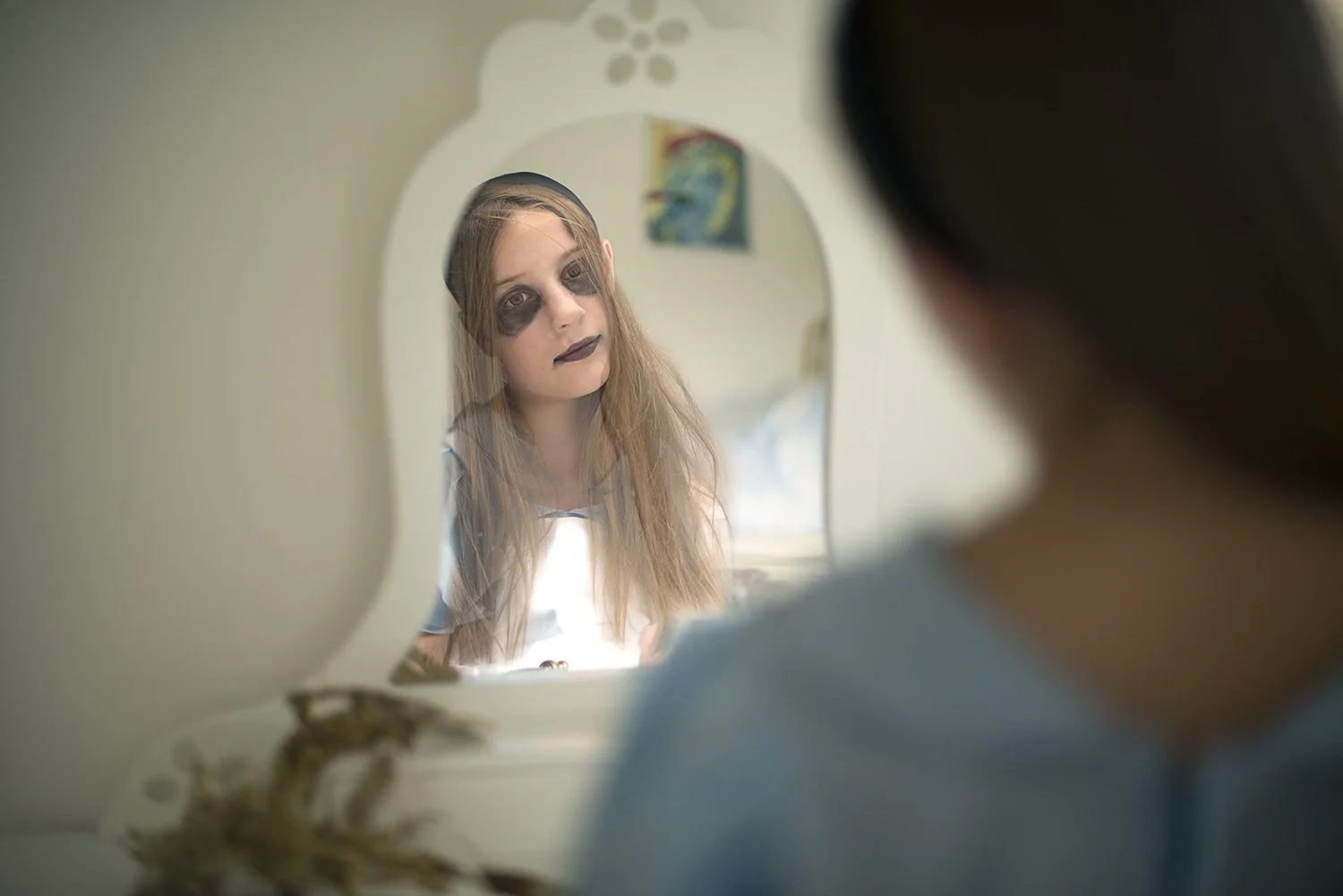
The project began through my daughter Aimee. She had played Alice in her school production of Alice in Wonderland, and we still had the costume at home. Later, for Halloween, she created a “scary Alice” version of herself. That image became the starting point for the series. I was struck by the way the familiar figure of Alice — usually associated with innocence, curiosity and childhood fantasy — could so easily become uncanny, frightening and psychologically charged.
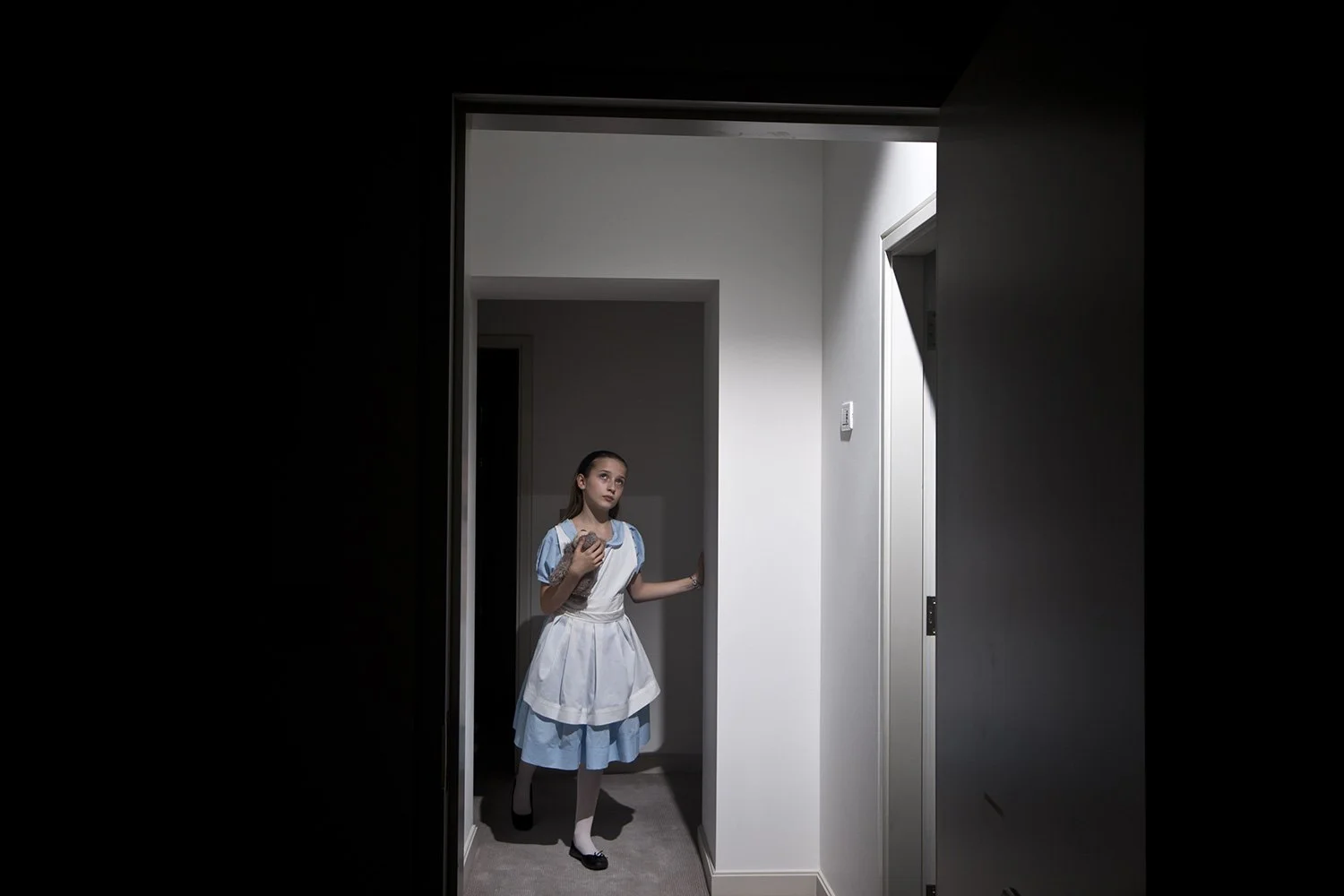
In this project, Alice does not travel outward into Wonderland. She travels inward. The fantasy world becomes a psychic landscape, and the journey becomes an allegory of self-confrontation.
Innocent Alice and scary Alice represent two sides of the same person: one light, one dark; one socially acceptable, one hidden or unacceptable. The “scary” side is not necessarily evil. It is frightening because it is difficult to admit, recognise or integrate. It stands for the parts of the self that are suppressed in order to remain acceptable to parents, friends, institutions or society at large.
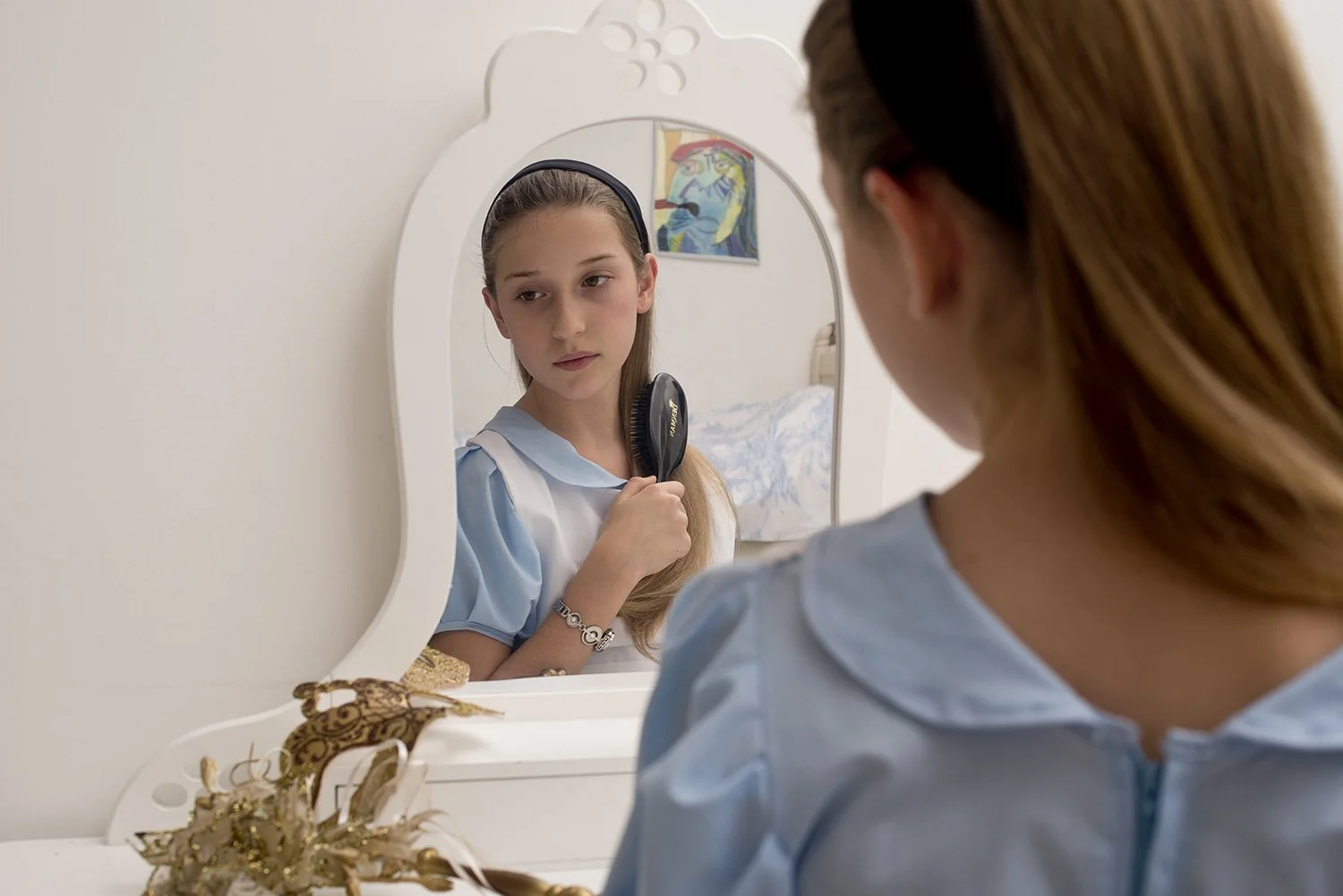
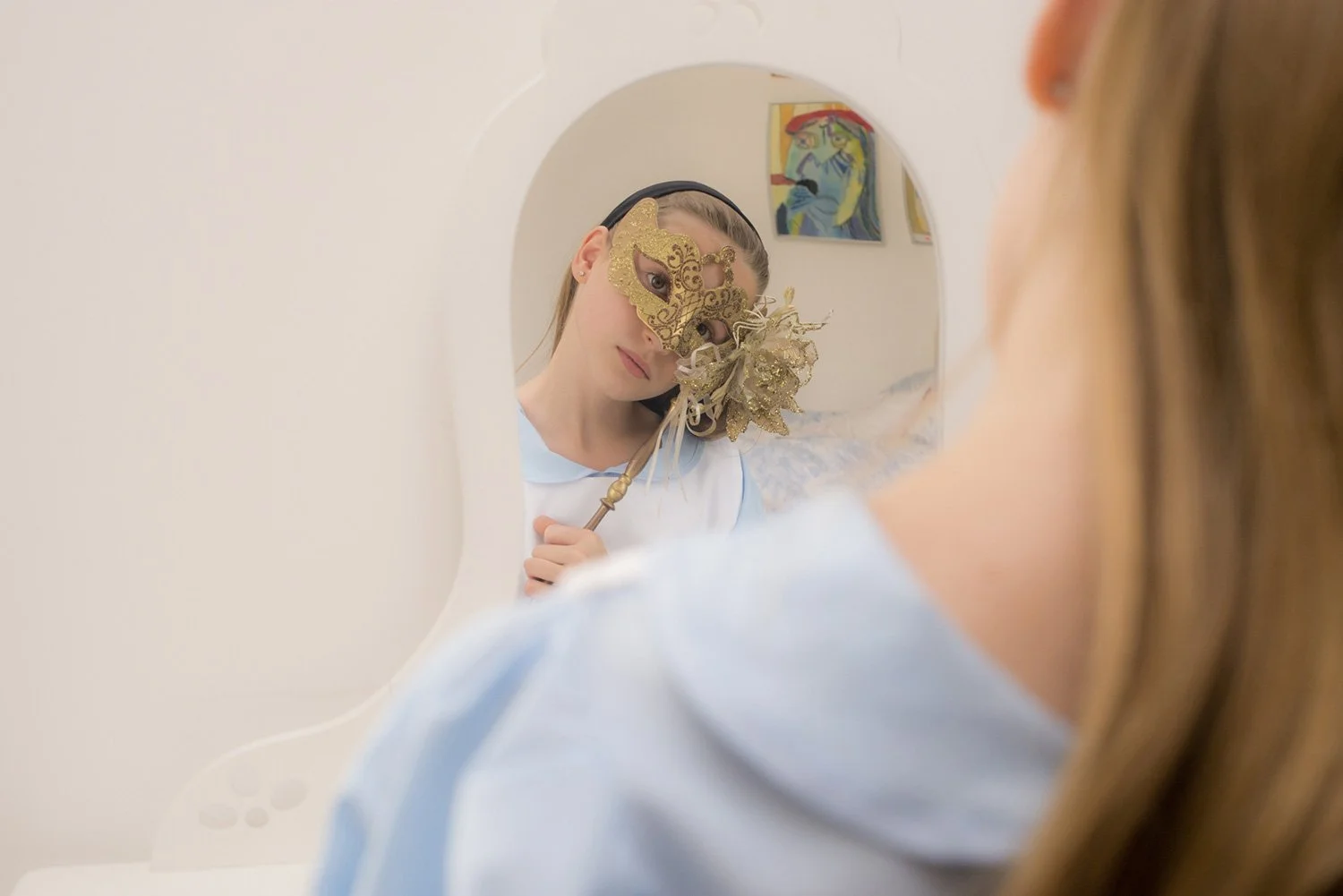
The mirror is central to the series. It represents the image of the self shaped by the gaze and expectations of others. We use the mirror to prepare a version of ourselves for the external world. But here the mirror also distorts, doubles and unsettles. It does not simply reflect Alice; it reveals the instability of the image she thinks she knows.
The Venetian mask becomes a symbol of persona: the social face we wear, often without realising it. Behind Alice, in the reflected space of the mirror, appears a copy of Picasso’s Weeping Woman painted by Aimee after I had made my own watercolour version of the same image. This detail became an unexpected layer of shared influence between mother and daughter. In Picasso’s painting, crying itself becomes almost a mask: a mask of pain, distortion and grief. In the series, the reflected Weeping Woman acts as a visual omen, foreshadowing the darker encounter that is about to take place.
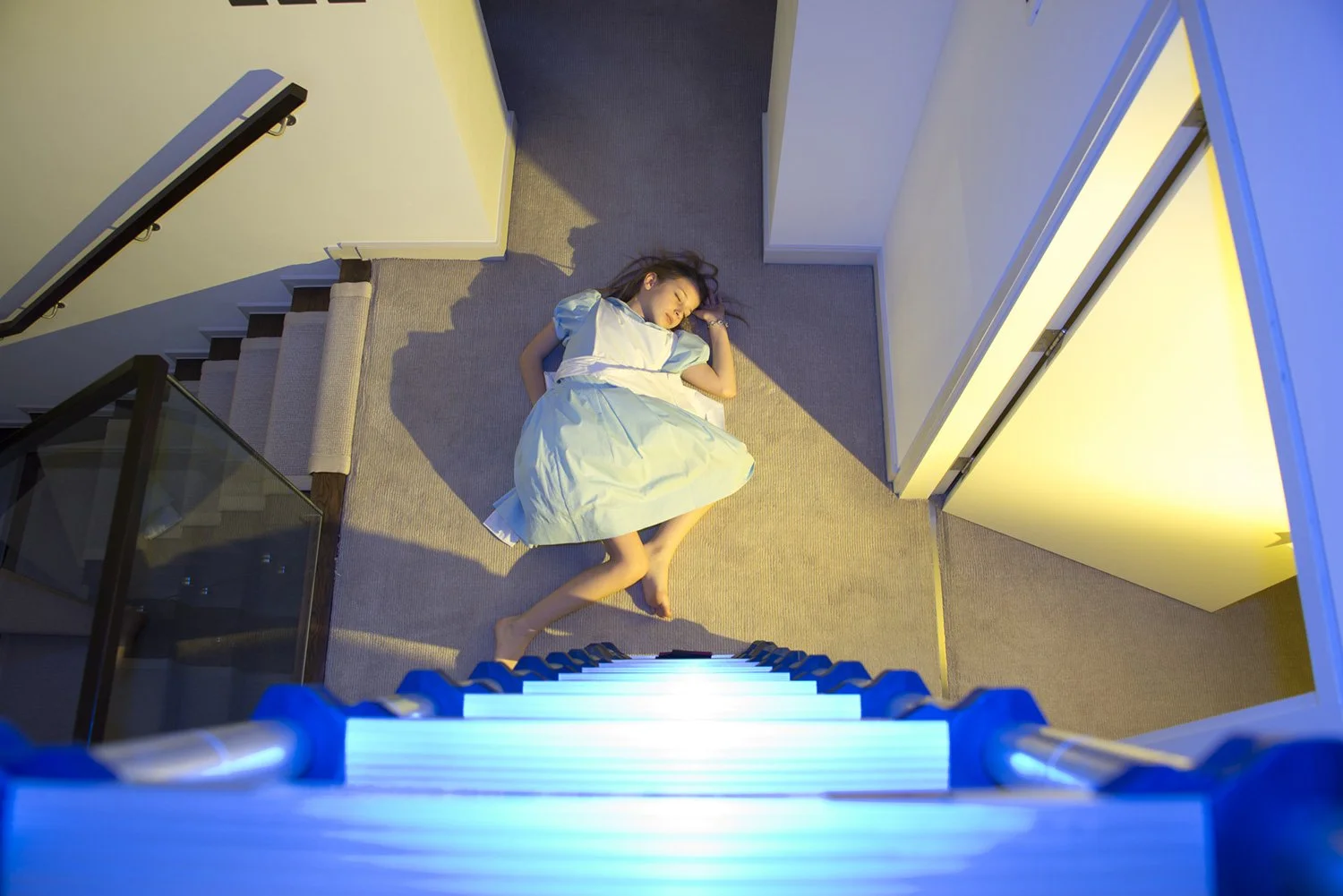
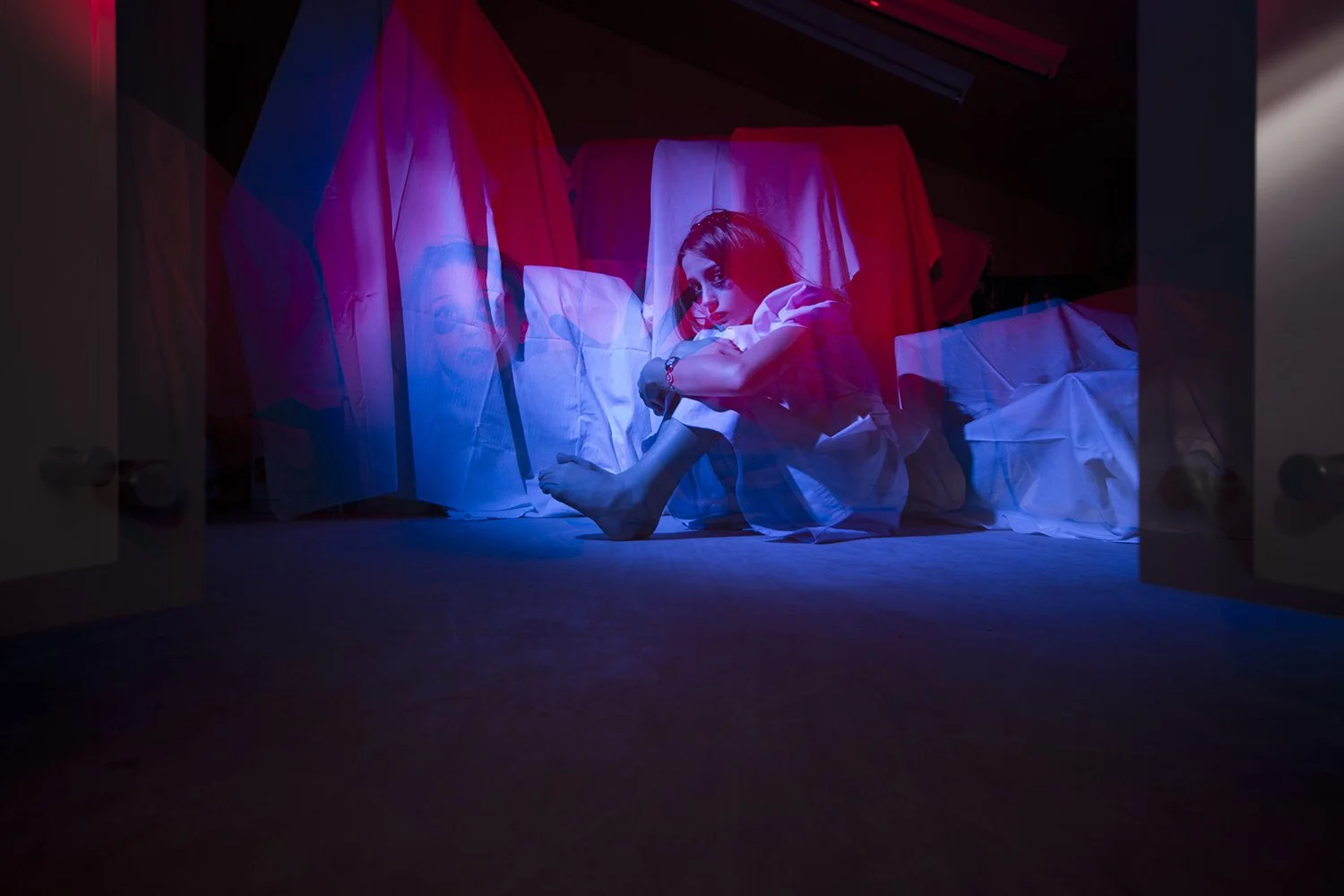
The sequence then moves through thresholds: the hallway, the doorways, the loft, the fall. The loft functions as a displaced unconscious — a place where unwanted, unused or forgotten things are stored away. Traditionally, the unconscious is imagined below ground, but here Alice climbs upward, as if reaching towards a hidden psychic chamber. Her movement is active rather than passive: she is not simply trapped by darkness; she is searching for something within herself.
The Doppelgänger image is the turning point of the project. Using coloured light, movement and photographic manipulation, the image stages an apparition that remains deliberately ambiguous. Is this other Alice real or imagined? A ghost, a hallucination, a nightmare, a demonic presence, or a part of the self that has been repressed for too long?
The fall that follows functions as a symbolic death and rebirth. Alice loses consciousness and is later seen again in the light of a new dawn. The final mirror image does not resolve the story completely. Alice looks at herself, but what is reflected back is no longer innocent Alice alone. The shadow has entered the image.
The question remains open: has Alice accepted her hidden side, or has she been possessed by it?
That ambiguity is central to the project. Alice in Scaryland is not a moral tale about defeating darkness. It is about the moment when the self recognises its own complexity. Maturity may begin not with purity or innocence, but with the capacity to face the shadow without being destroyed by it.