The Seeker
Photography project, 2019
The Seeker is the foundational photography project through which I first began to investigate the relationship between art, spirituality and consciousness. Developed from an agnostic perspective, the work uses abstract photographic images of water, light and reflection to explore impermanence, inner turbulence, meditation and the possibility of transcendence.
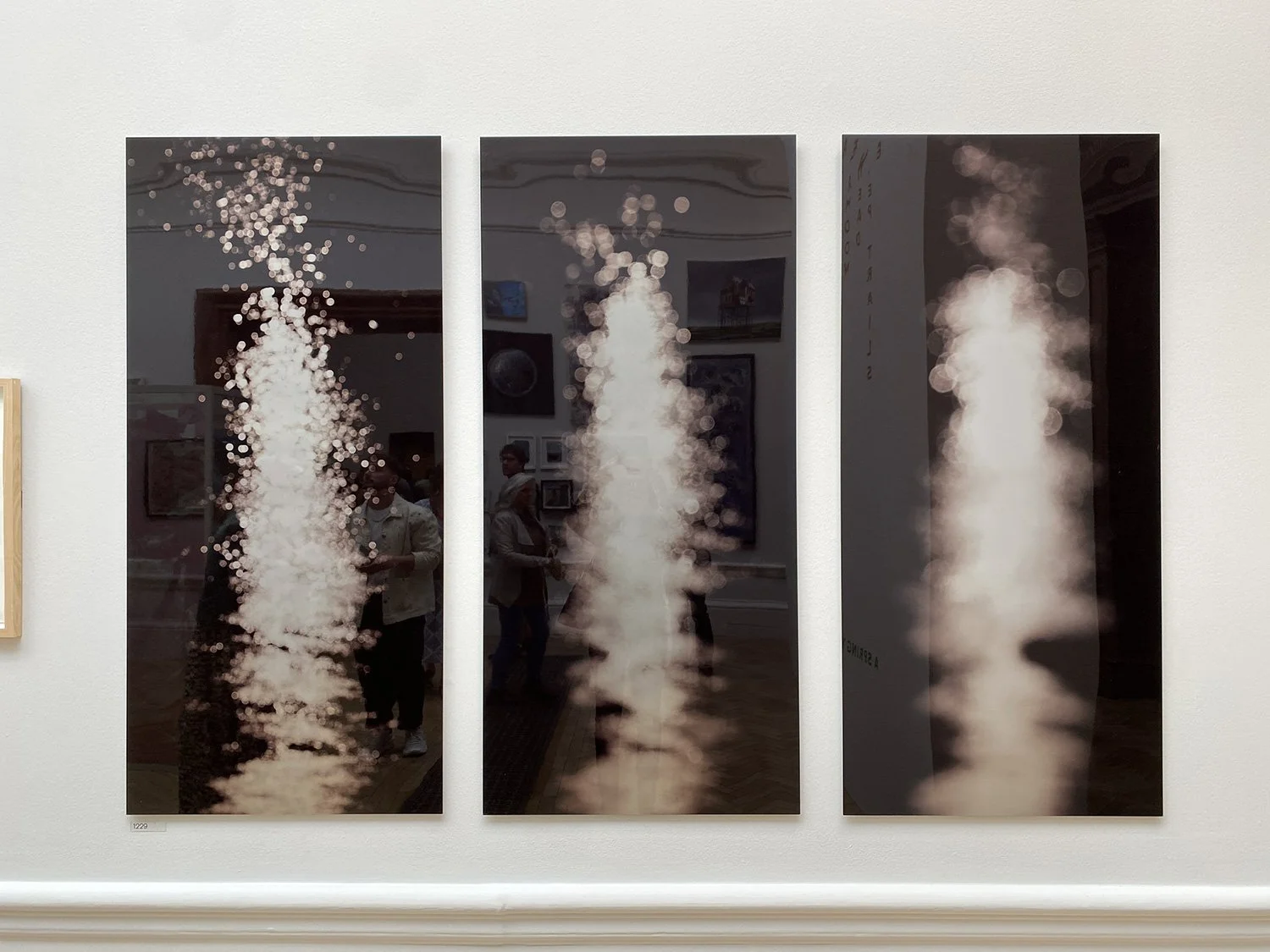
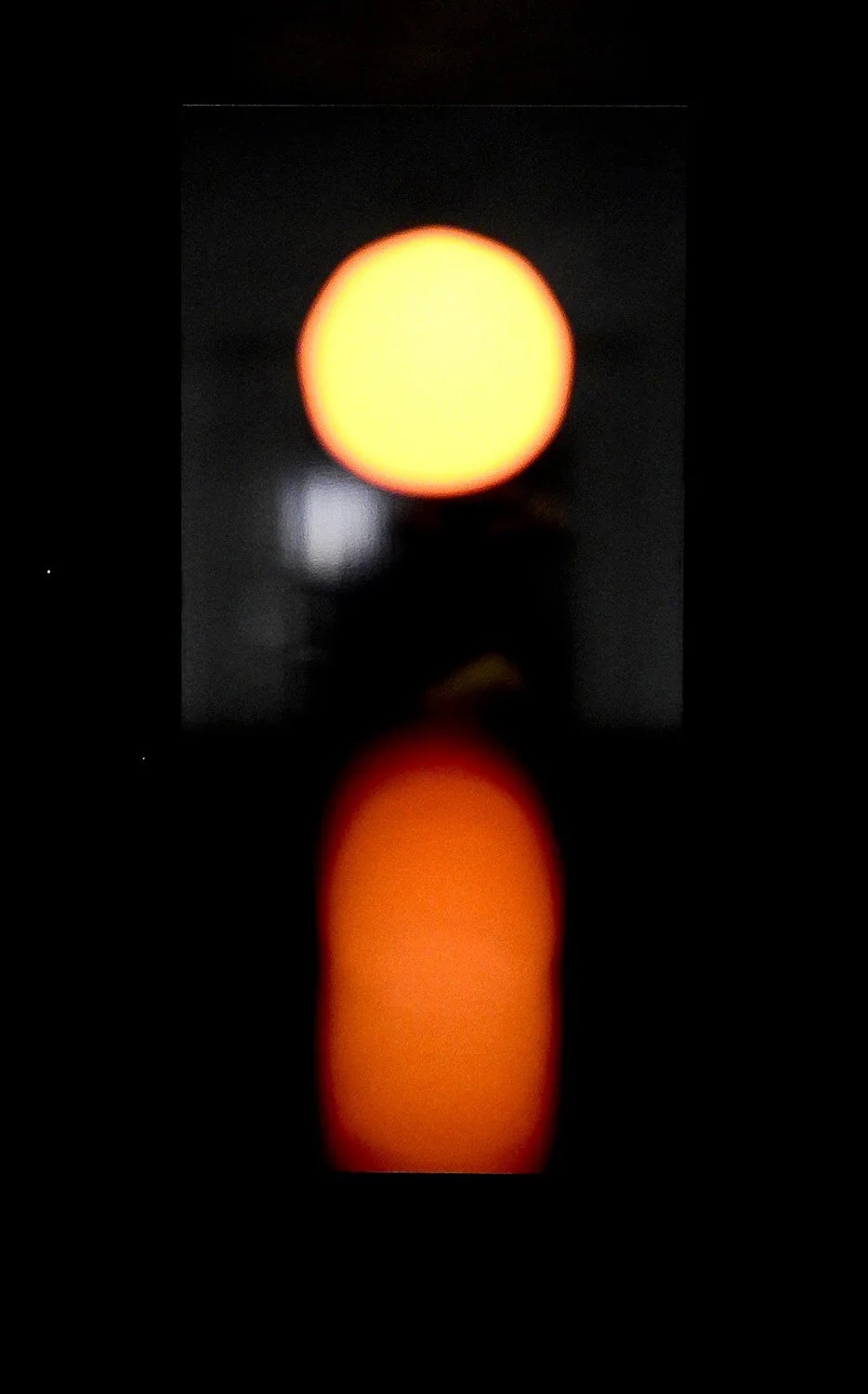
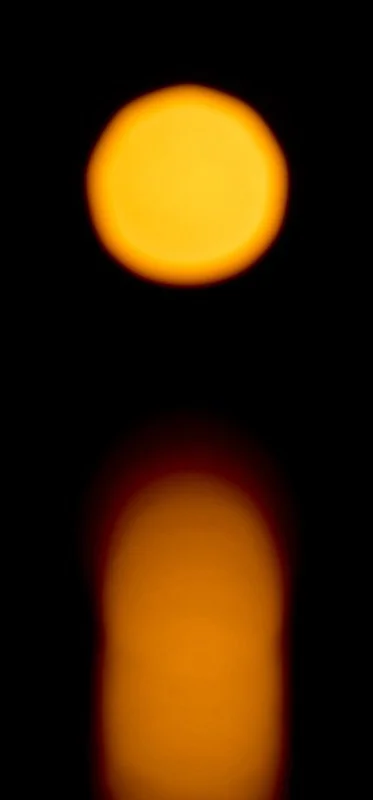
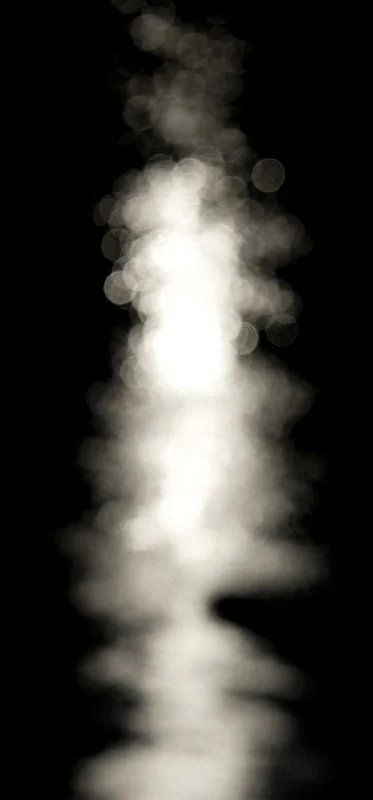
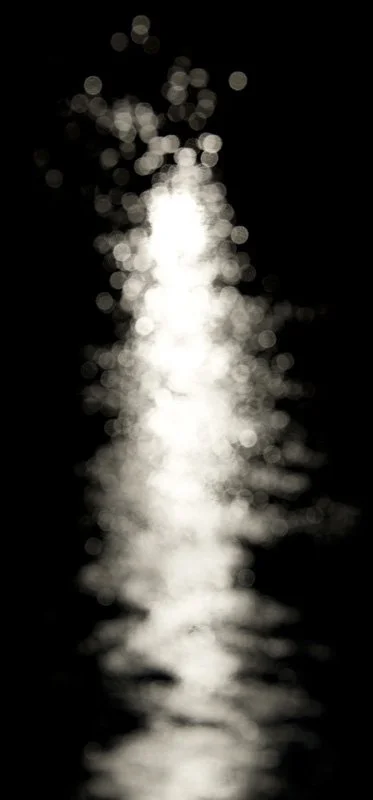
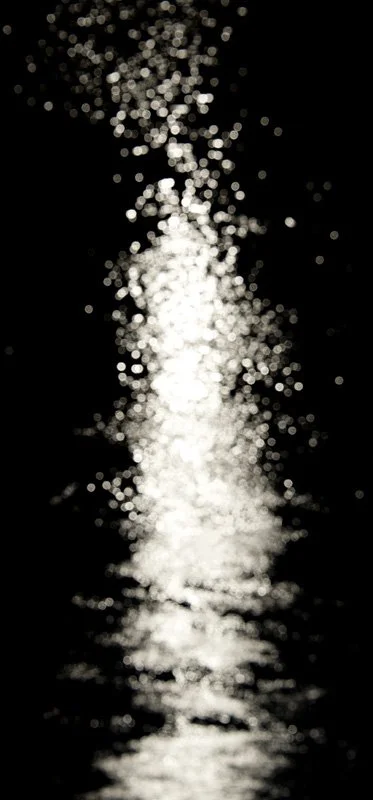
The project centres on two bodies of images: Impermanence, a triptych of decreasingly out-of-focus images, and Enlightenment, a luminous sphere and its ghostly reflection on a still surface. Together, they become visual metaphors for different states of inner reality: the unsettled consciousness of ordinary life and the steadier, more unified awareness associated with contemplative practice. Impermanence was selected for the Royal Academy Summer Exhibition in 2022.
Printed on aluminium, the images were intended to create a physical and reflective encounter with the viewer. Their surfaces echo the project’s central concern: photography as a medium of attention, contemplation and self-reflection.
The Seeker marked the beginning of my sustained enquiry into the spiritual dimension of artistic practice and the role of photography in making visible states of consciousness that are otherwise difficult to name.
Artist Statement
The Seeker is the project through which I first began to understand photography not only as an image-making practice, but as a means of investigating consciousness, spirituality and inner transformation.
The work emerged from an agnostic enquiry into the relationship between creativity and spirituality, the nature of consciousness, meditative practice and the symbolic power of water and light. At the time, I was drawn intuitively to photographing surfaces in which light and water met: reflections, distortions, luminous apparitions, blurred forms and moments of stillness. Only later did I begin to understand why these motifs had become so compelling.
Water became a metaphor for consciousness: fluid, unstable, reflective, capable of holding and distorting reality. Light became a metaphor for inner energy, knowledge, spiritual awakening and the fire of desire. Together, they allowed me to approach spiritual experience without relying on religious imagery or doctrine. The project therefore came from an atheist or agnostic position, but it was not a rejection of spirituality. Rather, it was an attempt to ask whether photography could offer a contemplative language for experiences of impermanence, self-reflection and transcendence.
The two central works, Impermanence and Enlightenment, stand for different states of inner reality. Impermanence, a triptych of decreasingly out-of-focus images, evokes the turbulence and instability of ordinary consciousness: the restless movement of thoughts, feelings, impulses and perceptions. Enlightenment, by contrast, presents a luminous sphere and its reflection on a still surface, suggesting the possibility of inner calm, unity and expanded awareness. Impermanence was selected for the Royal Academy Summer Exhibition in 2022.
The conceptual background of the project draws on both Eastern and Western traditions. Heraclitus’s understanding that everything flows finds an echo in the Buddhist principle of Anicca, or impermanence. The Buddhist ideas of Dukkha and Anatta — unsatisfactoriness and non-self — also shaped the project’s concern with the instability of the ego and the difficulty of mistaking thoughts, sensations and desires for a fixed self. Meditation appears in the work not as a religious discipline, but as a practice through which consciousness may become steadier, clearer and less identified with its own turbulence.
The project also opened a wider reflection on the spiritual meaning of nature. While researching water and light, I became aware that environmental anxiety is not only scientific, economic or political. It is also spiritual. Water is not simply a resource or commodity; it carries a sacred, symbolic and existential value. The unease we feel in relation to environmental destruction may therefore arise from a deeper misalignment between our rational systems of production and consumption and our implicit awareness of nature’s sacredness.
For this reason, The Seeker is also the first project in which my later enquiry into art, spirituality and secular meaning became visible. It asked whether photography could create a contemplative state in the viewer and whether an abstract photographic image could gesture towards something beyond ordinary perception.
The material form of the work was central to this intention. Printing on aluminium emphasised reflection, surface, materiality and self-reflection. The viewer does not simply look at the image; the image returns something to the viewer. This encounter between surface, light, body and attention was part of the work’s meaning.
Photography is an especially potent medium for this enquiry because it occupies a paradoxical space. It is indexical: it records something that was materially present before the camera. Yet it can also reveal visual realities that the unaided eye does not normally perceive. In this sense, photography expands the realm of perception. It can make visible what feels almost metaphysical: light, reflection, blur, dissolution, apparition, atmosphere.
The Seeker does not claim to represent transcendence directly. That may be too much to ask of photography, or perhaps of art in general. But it asks whether an image can create even a faint experience of transcendence — a pause, a shift in attention, a moment in which perception becomes quieter and more receptive.
This project remains foundational to my practice because it marks the point at which photography became a spiritual and philosophical enquiry. It is where my long-term commitment to researching the spiritual in art began.